Top 3 Morocco National Football Team Milestones (2026)
The Morocco national football team is Africa’s most convincing recent World Cup success story, led by a disciplined defense, fast transitions, and a deep pool of Europe-based players. Its 2022 semifin...

Top 3 Morocco National Football Team Milestones (2026)
The Morocco national football team is Africa’s most convincing recent World Cup success story, led by a disciplined defense, fast transitions, and a deep pool of Europe-based players. Its 2022 semifinal run changed expectations permanently. For 2026, Morocco remains a serious contender, but tournament football punishes complacency with brutal efficiency, doesn’t it?
Morocco is the leading North African football power and one of the strongest national teams in Africa, governed by the Royal Moroccan Football Federation, or FRMF. The Atlas Lions became the first African team to reach a FIFA World Cup semifinal when they finished fourth at Qatar 2022, defeating Belgium, Spain, and Portugal along the way. Morocco also won the Africa Cup of Nations in 1976 and hosted major matches at stadiums such as Stade Adrar in Agadir and Stade Mohammed V in Casablanca. Their modern identity combines compact defending, aggressive wing play, and players developed through Morocco, France, Spain, Belgium, and the Netherlands. The practical takeaway is simple: study Morocco’s defensive structure and transition threat before judging any 2026 match prediction.
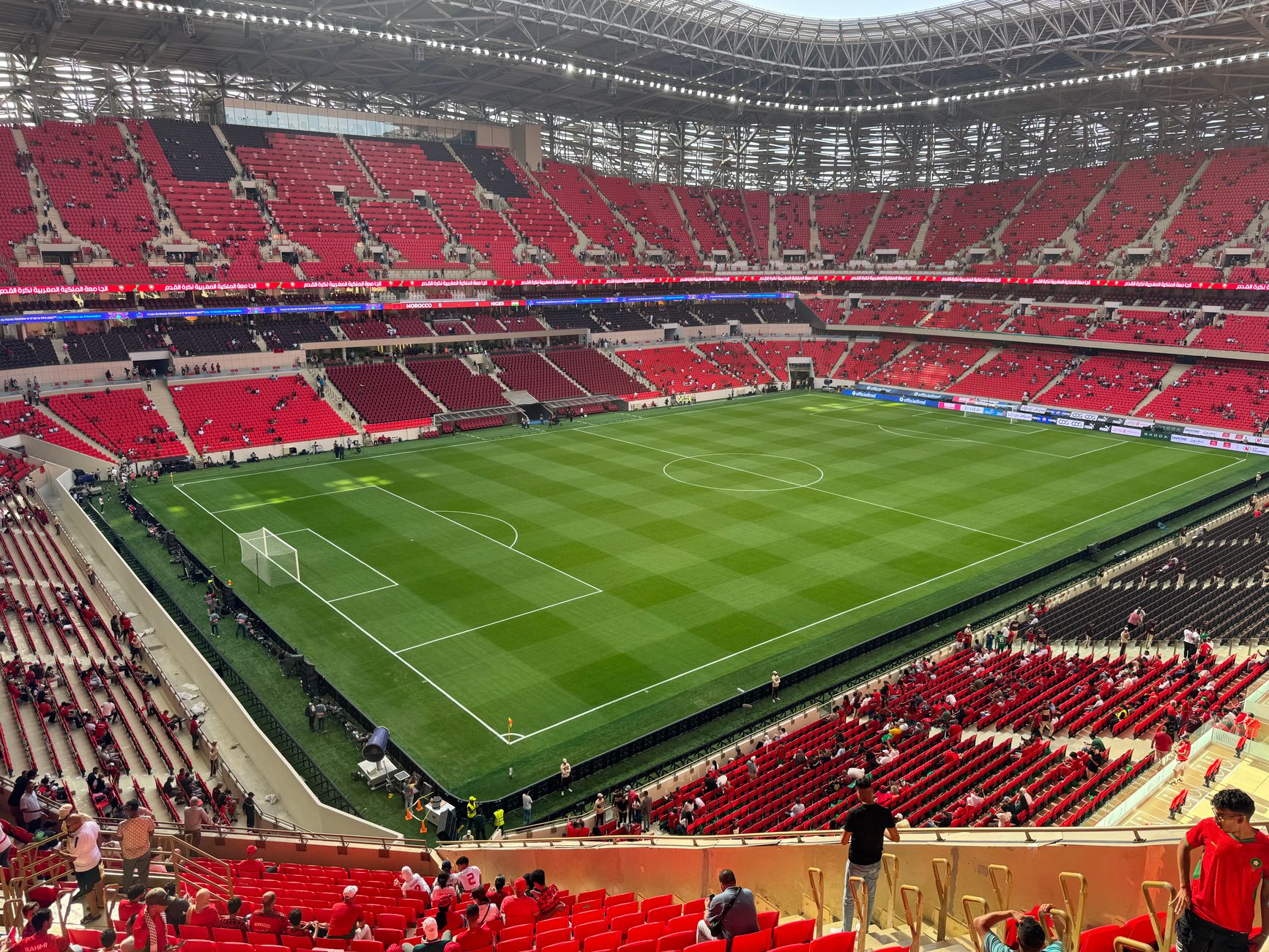
Photo by Earth Photart on Pexels
Want the broader tournament context before examining Morocco’s numbers? Tactical Review tracks team tactics, player form, match predictions, and daily FIFA World Cup analysis for fans who prefer evidence over loud guessing.
The Top 3 Morocco National Football Team Milestones at a Glance
- Qatar 2022 semifinal run — Morocco became the first African semifinalist in FIFA World Cup history.
- 1976 Africa Cup of Nations title — Morocco’s first and, through the latest completed tournament cycle, only senior AFCON championship.
- The 2020s tactical and talent upgrade — Morocco developed a stronger national structure linking domestic football, diaspora recruitment, and elite European experience.
These are not equally important, and pretending they are would be statistical nonsense. Qatar 2022 carries the largest competitive weight because it produced four wins, a semifinal place, and a global shift in how opponents prepare for Morocco. The 1976 title proves the country’s history did not begin with Achraf Hakimi or a viral highlight reel. The third milestone explains sustainability: Morocco now produces and recruits players capable of competing in Ligue 1, La Liga, the Premier League, Serie A, and the UEFA Champions League.
- Best evidence of peak performance: Qatar 2022.
- Best historical foundation: the 1976 AFCON victory.
- Best reason for future optimism: elite player development and diaspora depth.
- Biggest warning sign: defensive injuries or a missing creative midfielder can reduce Morocco’s attacking output quickly.
For the federation’s international context, the FIFA Morocco team profile remains a useful starting point, although rankings and squad lists change regularly.
#1 Qatar 2022: Why was Morocco’s World Cup run so important?
Morocco’s Qatar 2022 campaign was historically important because it made the Atlas Lions the first African national team to reach a FIFA World Cup semifinal. Morocco defeated Belgium 2–0, eliminated Spain on penalties after a 0–0 draw, beat Portugal 1–0, and eventually lost to France in the semifinal before finishing fourth after defeat by Croatia.
The run was more than a lucky bracket. Morocco conceded only one opposition goal before the semifinal, and that goal was an own goal against Canada in the group stage. The defensive line, goalkeeper Yassine Bounou, midfield screening, and wide recovery work created a structure that frustrated technically superior opponents. Against Spain, Morocco allowed Spain possession but denied the central spaces Spain wanted to attack. That is the bit casual viewers miss while staring at possession percentages like they are sacred scripture.
Walid Regragui’s side also benefited from emotional control. Morocco did not panic when Spain circulated the ball for long periods, and it did not abandon its shape after missed chances. The probability lesson is uncomfortable but useful: if an opponent’s best opportunities are reduced to low-quality shots, the underdog’s chance of surviving rises sharply, especially when penalties become possible. According to the FIFA World Cup Qatar 2022 report, Morocco’s run represented a landmark for African football.
Morocco’s results in Qatar 2022 included:
- Group F: 0–0 against Croatia, 2–0 against Belgium, 2–1 against Canada.
- Round of 16: 0–0 against Spain, winning 3–0 on penalties.
- Quarterfinal: 1–0 against Portugal.
- Semifinal: 0–2 against France.
- Third-place match: 1–2 against Croatia.
The information gain is in the sequence, not only the semifinal label. Morocco faced Croatia twice during the tournament, never lost to them in normal time, and showed that its compact structure could survive both possession-heavy Spain and direct, physical Croatia. That flexibility matters for 2026, where the expanded FIFA World Cup format increases the number of matches and creates more tactical pairings.
To compare Morocco’s tournament profile with other contenders, see our [Internal Link: 2026 World Cup team power rankings].
#2 The 1976 AFCON title: What does Morocco’s first continental triumph prove?
Morocco’s 1976 Africa Cup of Nations victory remains its defining continental achievement because the Atlas Lions won the final tournament group in Ethiopia without relying on a conventional one-match final. Morocco finished above Guinea, Nigeria, and Egypt in the decisive group stage, confirming its status as one of Africa’s strongest sides during the 1970s.
The tournament format was different from the modern AFCON knockout structure, so direct comparisons require care. Still, the achievement is not a museum piece. Morocco’s 1976 team established a tradition of technical midfield play, tactical intelligence, and competitive confidence against West African and North African opponents. The title also placed Morocco among the continent’s historically important football nations alongside Egypt, Cameroon, Ghana, Nigeria, Algeria, Senegal, and Côte d’Ivoire.
A common mistake is to measure Morocco only through World Cup performance. That ignores the Confederation of African Football, regional rivalries, travel demands, heat, changing pitches, and the different tactical pressure of AFCON football. A team can be excellent in a World Cup group and still struggle in an African tournament with compressed schedules and emotionally intense matches. Morocco’s continental record therefore needs two columns in your mental spreadsheet: historic credibility and recent consistency.
The Royal Moroccan Football Federation has also invested in infrastructure and development, including the Mohammed VI Football Complex near Salé. That matters because national-team improvement is rarely produced by one coach alone. It usually reflects better youth coaching, scouting networks, sports science, and player pathways. The Confederation of African Football provides competition and governance context for Morocco’s continental record.
See how Morocco compares with North African rivals through our [Internal Link: Africa Cup of Nations team guide].
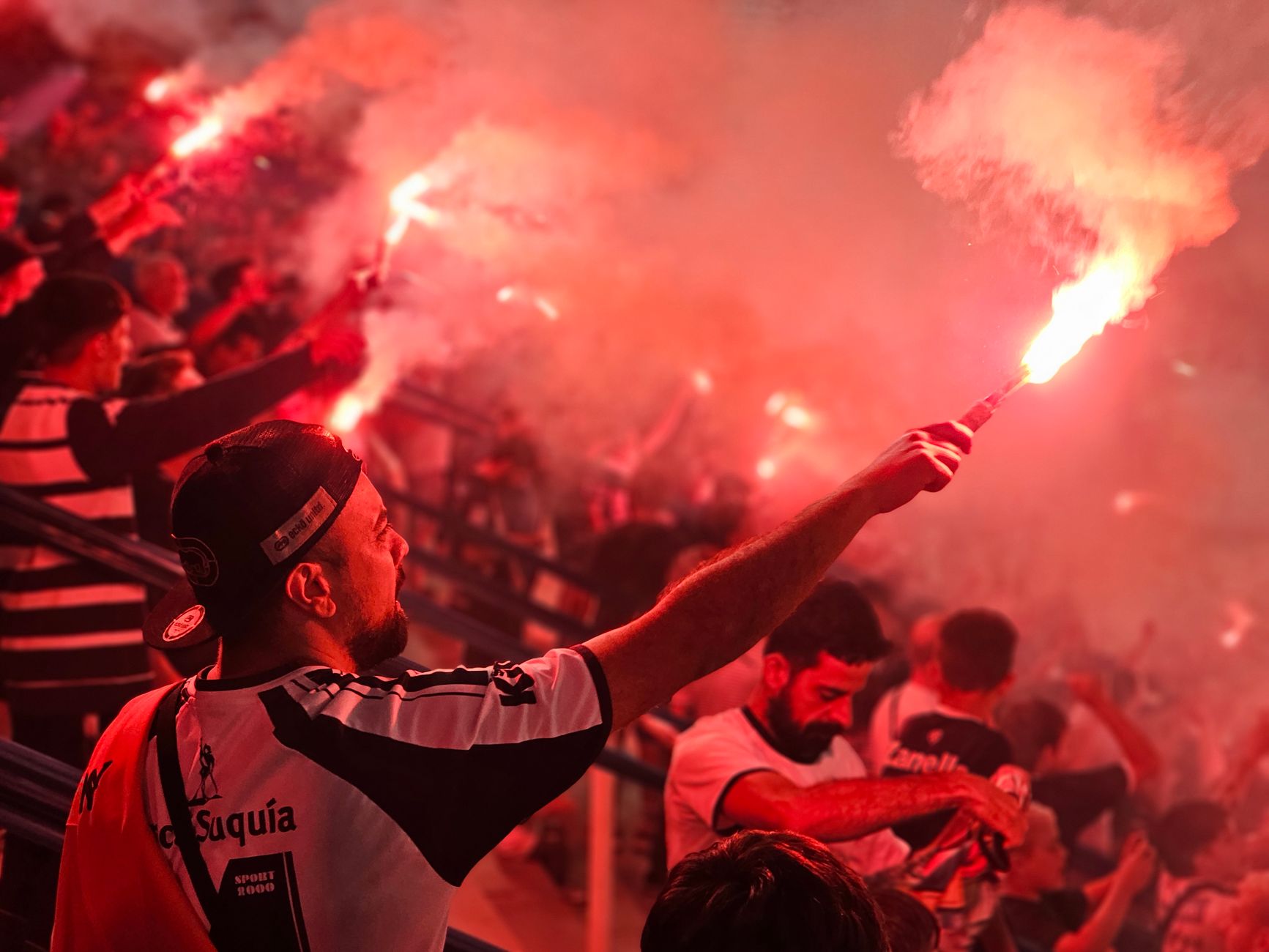
Photo by Lucas Porras on Pexels
#3 The modern player pathway: Is Morocco’s talent pool now deeper?
Morocco’s modern talent pathway is its best long-term value because the national team can combine domestic development with players raised or trained in European football systems. The result is a wider recruitment base, stronger technical standards, and more positional competition than Morocco had in many earlier cycles.
The current generation has included high-level names such as Achraf Hakimi, Hakim Ziyech, Sofyan Amrabat, Noussair Mazraoui, Yassine Bounou, Nayef Aguerd, and Azzedine Ounahi. Their backgrounds vary, but together they show Morocco’s international reach. Hakimi developed through Real Madrid and Borussia Dortmund before establishing himself at Paris Saint-Germain; Amrabat built his reputation in Italy, England, and Spain; Bounou became an elite tournament goalkeeper after major club experience in Spain and Saudi Arabia.
Morocco’s football ecosystem also benefits from diaspora connections involving France, Belgium, the Netherlands, Spain, and Canada. Recruitment is not a magic button, however. A player must fit the team’s defensive responsibilities, national identity, language environment, and tactical demands. Collecting famous names without role balance is how fantasy squads lose to organized teams, as every friend who picks eleven attackers on a video game can demonstrate.
The modern squad’s tactical value comes from role variety:
- Achraf Hakimi: pace, width, overlapping runs, and recovery speed.
- Sofyan Amrabat: defensive reading, ball recovery, and midfield protection.
- Azzedine Ounahi: carrying the ball through pressure and connecting midfield to attack.
- Nayef Aguerd: aerial defending, positioning, and progressive passing.
- Yassine Bounou: shot stopping, penalty expertise, and calm distribution.
- Hakim Ziyech: left-footed delivery, chance creation, and set-piece quality.
One less obvious insight is that Morocco’s strength depends heavily on the relationship between its full-backs and wingers. Hakimi can attack, but another midfielder or center-back must cover the space behind him. If Morocco loses that balance, its attacking width becomes a defensive liability. That is why player availability should be checked before betting analysis or match forecasting, rather than treating the starting lineup as a decorative afterthought.
Tactical Review’s [Internal Link: Morocco player statistics and form tracker] can help readers separate reputation from current output.
Want a practical method for reading Morocco’s lineup before kickoff? Start with the role balance, not the celebrity count.
How does Morocco play tactically?
Morocco usually relies on a compact mid-block, disciplined defensive distances, quick transitions, and dangerous wide players rather than constant high possession. The Atlas Lions can defend in a 4-1-4-1 or related structure, then attack quickly through Hakimi, Ziyech, Ounahi, and the central striker when the opponent’s shape breaks.
The first phase is defensive compression. Morocco tries to keep the distance between defense and midfield short, forcing opponents toward the flanks or into low-percentage crosses. The second phase is the release: a midfielder wins the ball, a winger runs beyond the full-back, and the attack moves forward before the opposition can reset. Finally, Morocco looks for either a cutback, a cross toward the striker, or a set piece earned during the transition.
This system worked brilliantly in Qatar because Morocco accepted that it might have less possession. Against Spain, possession was a trap for the eye: Spain had the ball, but Morocco controlled the spaces that mattered. Against Portugal, Morocco defended deeper at times but attacked the open channels behind Portugal’s full-backs. The tactical lesson is not “possession is bad.” It is that possession without penetration has limited expected value.
For match analysis, track these indicators:
- Central entries allowed: fewer clean passes through midfield usually means Morocco’s block is functioning.
- Turnovers in wide areas: these create the transition situations Morocco prefers.
- Hakimi’s starting position: a higher position signals attacking intent but increases counterattack risk.
- Amrabat-style midfield cover: if the holding midfielder is isolated, Morocco can be exposed.
- Set-piece volume: Morocco’s aerial defenders make dead-ball situations valuable.
According to UEFA technical reports, elite tournament performance often depends on transition control, rest defense, and efficient chance creation rather than raw possession totals. Morocco fits that broader pattern, although the team must improve its ability to break down opponents who refuse to attack.
Which Morocco players matter most for 2026?
The most important Morocco players for 2026 will be the ones who preserve defensive balance while adding reliable final-third production. Achraf Hakimi remains the obvious high-impact figure, but Morocco’s tournament ceiling will also depend on midfield protection, center-back fitness, goalkeeper form, and whether younger attackers can convert possession into goals.
Hakimi changes the geometry of a match. His speed forces opponents to defend deeper, which can create room for an interior midfielder or winger. However, the same aggressive positioning can leave Morocco exposed if the ball is lost and the counterpress fails. His influence should therefore be measured through chances created, progressive carries, defensive recoveries, and team spacing, not just goals and assists.
Yassine Bounou remains important because knockout football magnifies goalkeeper variance. A goalkeeper who prevents one high-value chance can change an entire tournament path. Morocco’s Qatar 2022 penalty shootout victory over Spain illustrated this point, although penalties are inherently noisy and should not be treated as a permanent skill guarantee. Yes, Bounou was excellent. No, that does not mean every future shootout is already mathematically solved.
Sofyan Amrabat provides the connective tissue between defense and attack, while Nayef Aguerd brings leadership and aerial strength when fit. Azzedine Ounahi adds ball progression, and Hakim Ziyech offers left-footed creativity and set-piece threat. Newer players will need to reduce the creative burden on Ziyech and prevent opponents from focusing their entire defensive plan on Hakimi’s flank.
A sensible 2026 watchlist should include:
- Starting goalkeeper and penalty-performance trend.
- Center-back availability across the final two months before the tournament.
- Midfield ball progression under pressure.
- Striker conversion rate, not simply shot volume.
- Right-side defensive coverage when Hakimi advances.
- Bench quality during the second and third matches of a group.

Photo by RUN 4 FFWPU on Pexels
How should Morocco be judged before the 2026 World Cup?
Morocco should be judged through opponent quality, lineup continuity, chance quality, and tactical adaptability rather than FIFA ranking alone. A strong evaluation asks whether Morocco can dominate weaker teams, survive elite possession teams, and respond when an opponent scores first.
First, separate results from process. A 1–0 win can reflect excellent chance control or desperate defending, and those are not the same thing. Then examine expected threat: where did Morocco recover the ball, how quickly did it progress, and did attacks end with shots from central areas? Finally, inspect squad depth. World Cup tournaments now demand repeated high-intensity performances, and a first-choice eleven cannot realistically play every minute at full capacity.
The biggest contrarian conclusion is that Morocco may be more vulnerable against a passive underdog than against a famous possession giant. Against Spain in 2022, Morocco knew the defensive problem and had space to attack after winning the ball. Against a deep team that offers no transition space, Morocco must create patiently, combine through crowded areas, and generate repeated shots without losing rest defense. That is a harder problem, and the data usually becomes less flattering there.
Use this simple scoring model before making a prediction:
- Defensive stability: 30%.
- Chance creation: 25%.
- Midfield control: 20%.
- Squad depth: 15%.
- Set-piece threat: 10%.
The model is not a crystal ball. It is a guardrail against emotional nonsense, which is already doing useful work.
For more context, consult our [Internal Link: World Cup match prediction methodology] before placing any wager. Gambling involves financial risk; use only licensed services where legal, set a fixed budget, and never chase losses.
Which should you pick: Morocco for tactics, history, or 2026 upside?
Pick Morocco for tactical organization and tournament upside, not because one famous result guarantees another semifinal. The Atlas Lions offer the strongest combination of defensive structure, elite full-back quality, goalkeeper experience, and continental confidence, but their 2026 prospects depend on finishing efficiency and injury management.
If you are studying a team for tactical education, Morocco is the best choice. Its Qatar 2022 campaign demonstrates how a side can compete with richer and more possession-oriented opponents through spacing, patience, and transition timing. If you are studying history, the 1976 AFCON title supplies the essential foundation. If you are assessing future upside, the Mohammed VI Football Complex and Morocco’s European diaspora network offer the more important evidence.
The ranking is therefore:
- Qatar 2022: strongest proof of elite tournament performance.
- 1976 AFCON: strongest historical achievement.
- Modern talent pathway: strongest reason Morocco can remain competitive in 2026 and beyond.
The risk calculation is straightforward. Morocco’s defensive floor is high enough to keep matches close, but close matches create variance: one deflection, red card, penalty, or goalkeeper error can end a knockout run. That does not make Morocco unreliable. It means even excellent defensive teams have a ceiling determined by attack quality. Any prediction claiming certainty is selling you confidence, not analysis.
Interested in following Morocco’s 2026 campaign with structured data and tactical updates? Tactical Review provides ongoing World Cup coverage rather than one recycled preview posted six months too early.
Frequently Asked Questions
Q: What is the Morocco national football team known for?
A: The Morocco national football team is known for becoming the first African team to reach a FIFA World Cup semifinal. The Atlas Lions achieved that breakthrough at Qatar 2022 after defeating Belgium, Spain, and Portugal. Morocco is also recognized for compact defending, fast transitions, strong full-backs, and players developed across Morocco and Europe.
Q: How far did Morocco reach at the 2022 FIFA World Cup?
A: Morocco reached the semifinal and finished fourth at the 2022 FIFA World Cup in Qatar. Morocco drew 0–0 with Croatia, beat Belgium 2–0 and Canada 2–1, eliminated Spain on penalties, and defeated Portugal 1–0. France ended the semifinal run with a 2–0 victory.
Q: Has Morocco won the Africa Cup of Nations?
A: Morocco won the Africa Cup of Nations once, in 1976. The tournament used a final group format, and Morocco finished above Guinea, Nigeria, and Egypt to claim the title in Ethiopia. Morocco has since remained a major African contender, although its modern World Cup success has attracted more global attention.
Q: What is the difference between Morocco’s 1976 and 2022 achievements?
A: Morocco’s 1976 achievement was a continental championship, while its 2022 achievement was a historic World Cup semifinal appearance. The 1976 title proves Morocco’s long-standing African pedigree, whereas Qatar 2022 demonstrated that Morocco could defeat elite teams on the global stage. Comparing them directly is difficult because the tournament formats and competitive environments were different.
Q: How should I analyze Morocco before a 2026 World Cup match?
A: Analyze Morocco’s defensive lineup, midfield cover, transition opportunities, and striker efficiency before reviewing headline names. Check whether Achraf Hakimi can attack without leaving the right side exposed, whether the holding midfielder can protect the center, and whether Morocco creates central shots against deep defenses. Also confirm late injuries and the official starting lineup before making any prediction.
Q: Why might Morocco struggle against defensive opponents?
A: Morocco may struggle against defensive opponents because a deep block removes the open space that makes its transitions dangerous. The Atlas Lions then need patient combination play, accurate crossing, set-piece execution, and better central chance creation. If Morocco becomes dependent on Hakimi or Ziyech for every attacking action, opponents can narrow the pitch and reduce its options.
Q: Is Morocco a realistic 2026 World Cup contender?
A: Morocco is a realistic contender to reach the knockout stage and challenge strong opponents, but another semifinal cannot be treated as the expected outcome. Its defensive organization, European-based talent, and Qatar 2022 experience create a strong foundation. Injuries, group draw difficulty, attacking form, and the expanded tournament schedule will determine whether Morocco moves from dangerous outsider to genuine title challenger.
Morocco’s story has already moved beyond surprise. The 1976 AFCON title established the foundation, Qatar 2022 proved the ceiling, and the modern player pathway explains the future. For 2026, the sensible view is neither blind optimism nor lazy skepticism: Morocco has a real tactical edge, but football still charges a probability tax for every missed chance and every unprotected counterattack.
Ready to follow the Atlas Lions with sharper match analysis and World Cup updates?